From the Museum
What is a jaali, and why does it still look so modern?
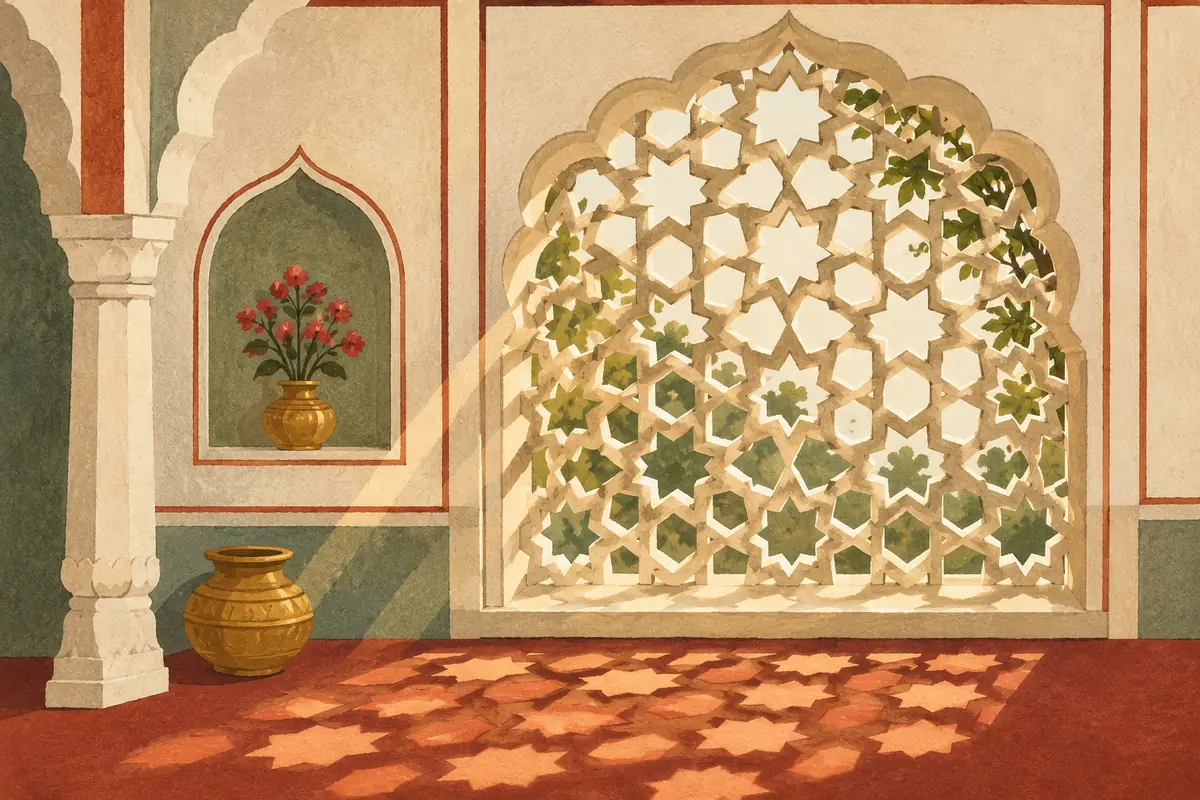
Walk through an old haveli, a Mughal tomb or a mosque in Ahmedabad and sooner or later you’ll stop in front of a jaali: a screen of stone carved right through with a pattern. Light comes in. Breeze comes in. The street can’t see you.
It’s one of the oldest ideas in Indian building, and it still looks fresh. Here’s why we keep coming back to it.
A window that does three jobs
In a hot country, a jaali is clever engineering. Small openings speed up the air that passes through, so the room feels cooler. They break harsh sunlight into soft dappled light. And they give privacy without shutting anyone in, which mattered a great deal in homes and palaces.
The most famous one is a tree
At the Sidi Saiyyed Mosque in Ahmedabad, built in 1573, a semicircular window shows a tree whose branches curl and twist into each other. It’s carved from stone, yet it looks like lace. It has become a symbol of the city.
A jaali is a pattern you look through, not just at. That’s what makes it work on a wall today.
Geometry you can feel
Many jaalis are built from a single shape repeated: a star, a hexagon, an interlocking cross. The eye can’t stop following the lines. That repetition is exactly what makes them suit modern rooms. They’re ornamental and calm at the same time.
How we used it
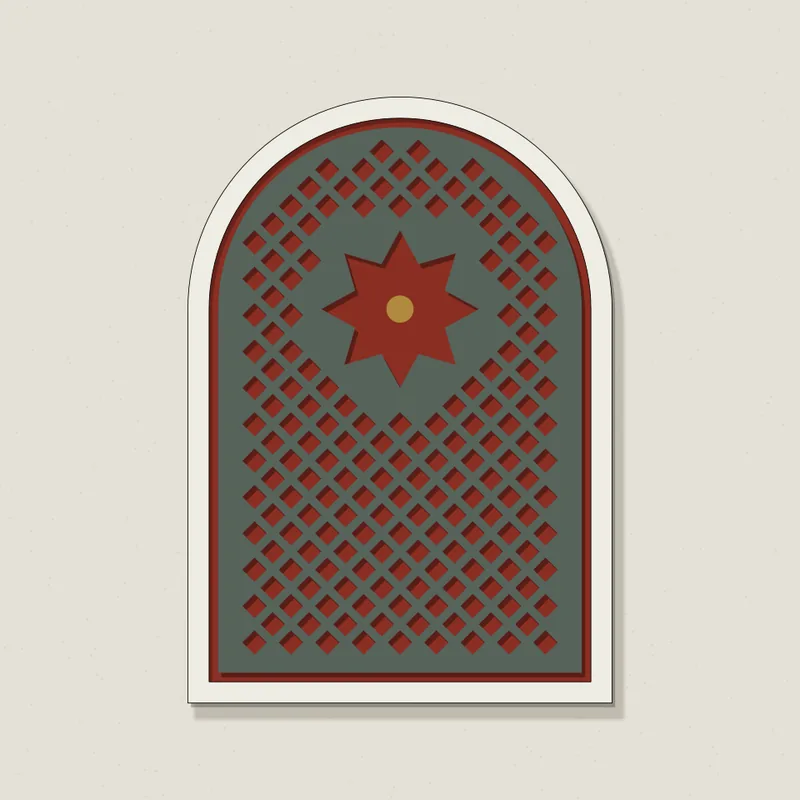
Our Mehrab Nameplate borrows the arch and the repeating star grid, with your family name set in the solid band below. Our Jaali Arch wall art stacks three layers so the pattern casts a real shadow on your wall, the way a stone screen does in the afternoon.
- Hang it where light falls from the side. The shadows are half the design.
- Against a dark wall, the lime layer glows. Against a white wall, choose the oxide or teak version.
- Leave space around it. A jaali needs a little air.