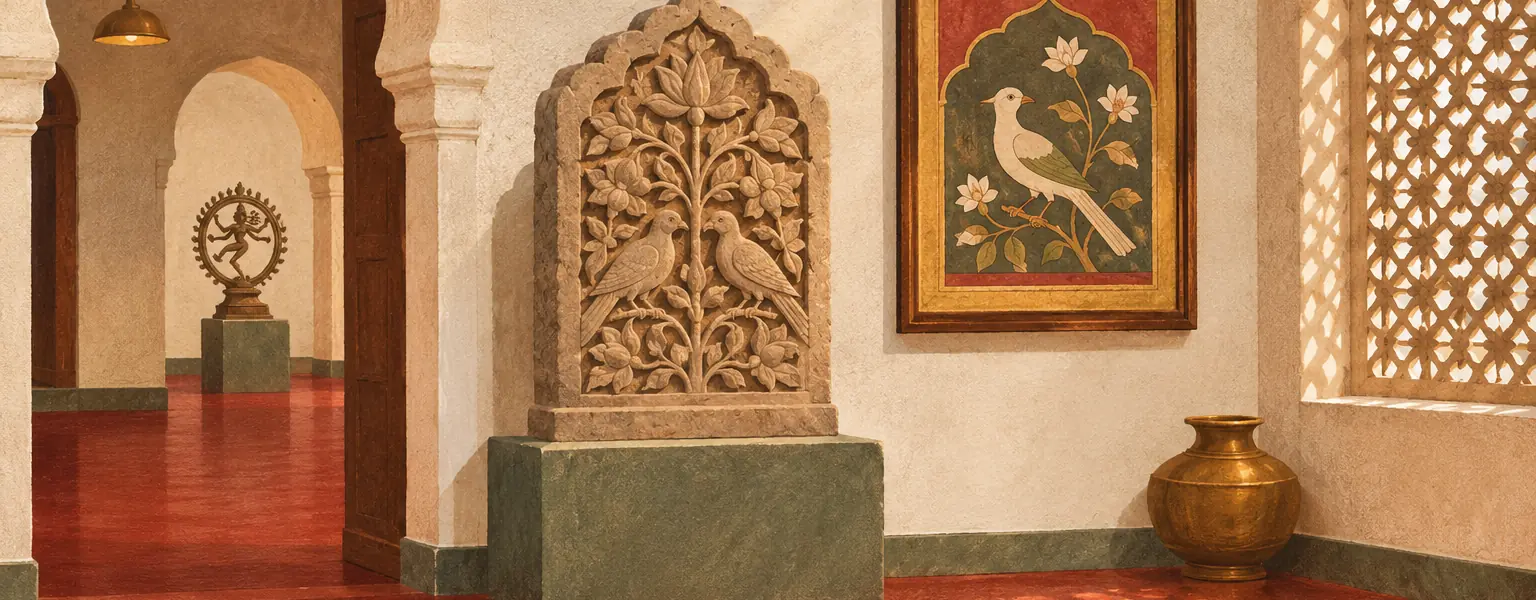
Thirteen rooms of Indian art, and what they taught us.
Walk through the art styles of India, from rock shelters to the floor of your nani's house. In each room you'll see the original, a few facts, and the Ukera pieces it inspired.
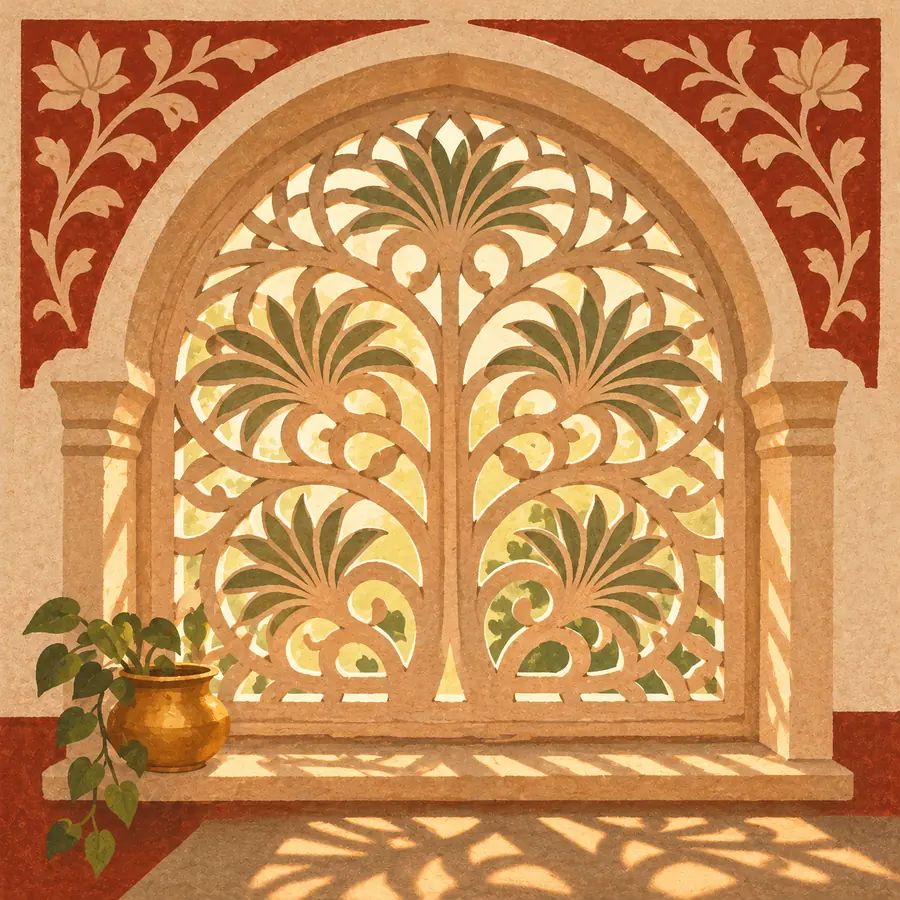
Ahmedabad, 1573 · Illustration
Marble jaaliTomb of Salim Chishti, Fatehpur Sikri Photo coming soon
Stone screenDetail of a geometric jaali Photo coming soon
Room 01 · Architecture
Jaali
जाली
Where
Gujarat, Rajasthan, Delhi, Agra
When
Mostly 16th–17th century
Made in
Carved stone and marble
What to look for. A jaali is a stone screen cut through with a pattern, so breeze and light come in while the room stays shaded and private. The best-known is the 'tree of life' window at the Sidi Saiyyed Mosque in Ahmedabad (1573). Look for the way the pattern repeats and branches.
Khajuraho detailAbout 950–1050 CE Photo coming soon
Room 02 · Architecture
Temple carving
मंदिर नक्काशी
Where
Khajuraho, Belur, Halebidu and across India
When
About the 10th–13th century for these temples
Made in
Sandstone and soapstone
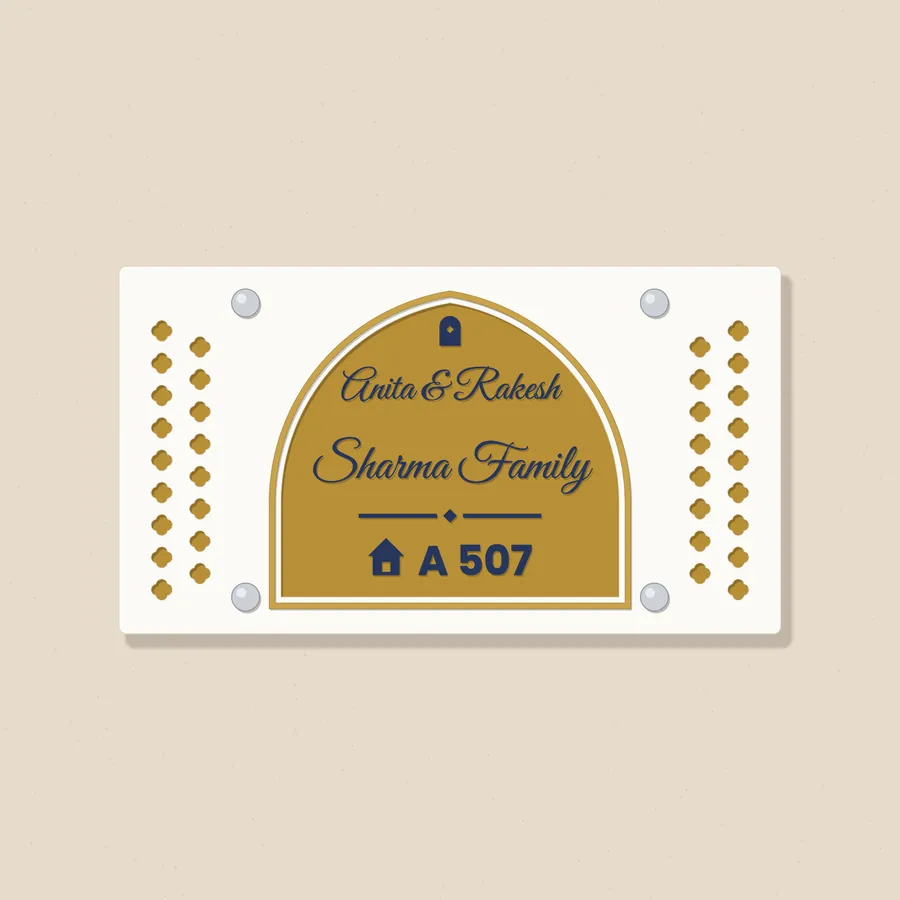
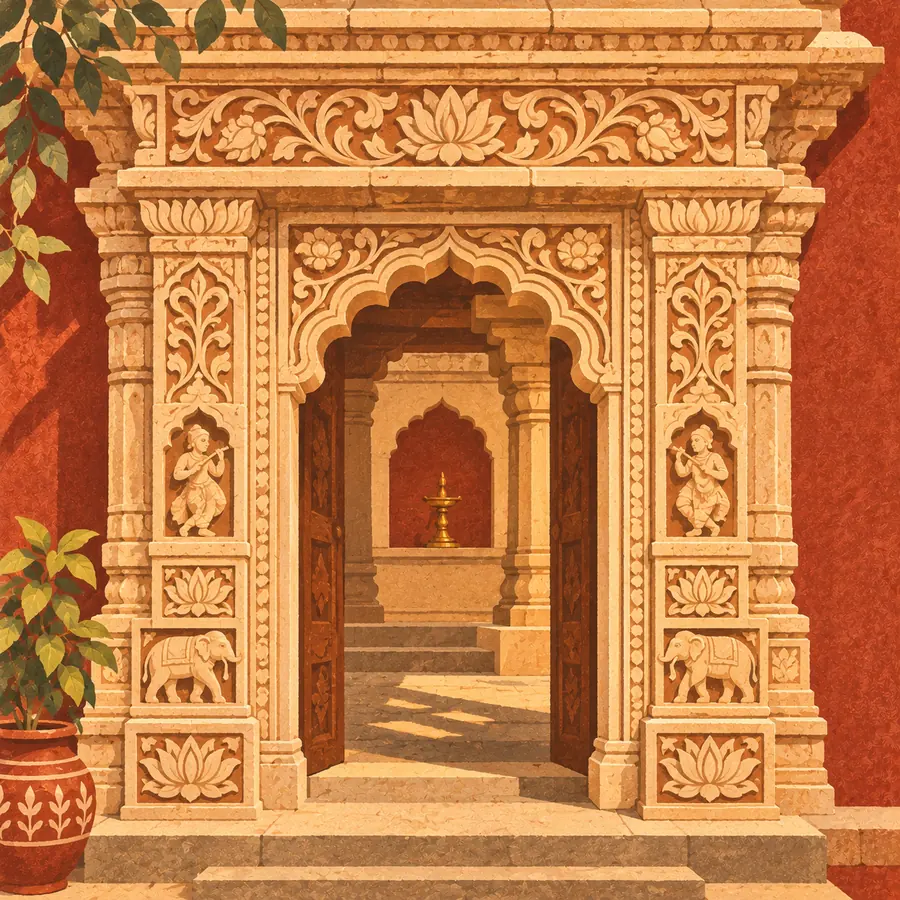
What to look for. Temple walls and doorways are wrapped in bands of carving: creepers (bel), lotuses, geese and small figures. The doorway itself was a place of welcome, which is why we think it's the right source for a nameplate.
Floral panelPietra dura in marble Photo coming soon
Inlay detailAgra, still made today Photo coming soon
Room 03 · Architecture
Parchin kari
परचिनकारी
Where
Agra, and Mughal buildings in north India
When
17th century
Made in
Coloured stones set into white marble
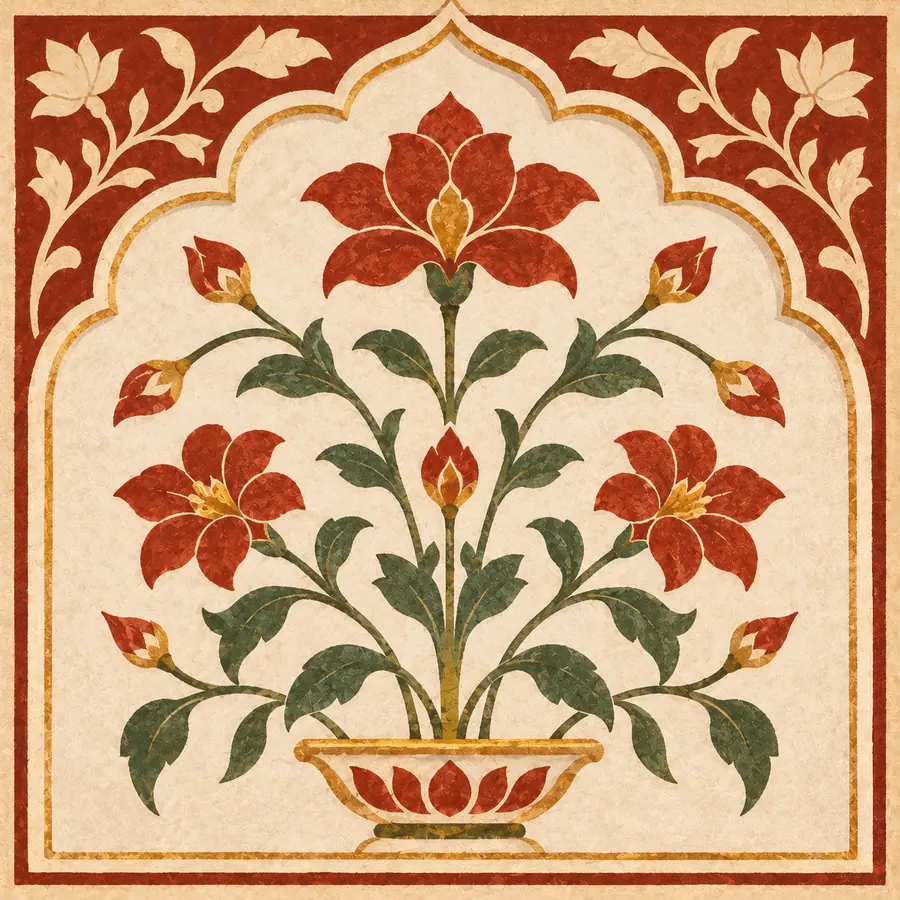
What to look for. Parchin kari means inlay work: thin pieces of coloured stone cut to shape and fitted into marble so closely the joins disappear. The flowers on the Taj Mahal are the famous example. Notice how each petal is its own piece of stone.
Ajanta muralDetail of a painted cave Photo coming soon
Room 04 · Painting
Rock and cave painting
गुफा चित्र
Where
Bhimbetka (Madhya Pradesh), Ajanta (Maharashtra)
When
Bhimbetka: thousands of years old. Ajanta: about 2nd century BCE to 5th century CE
Made in
Mineral pigments on rock and plaster
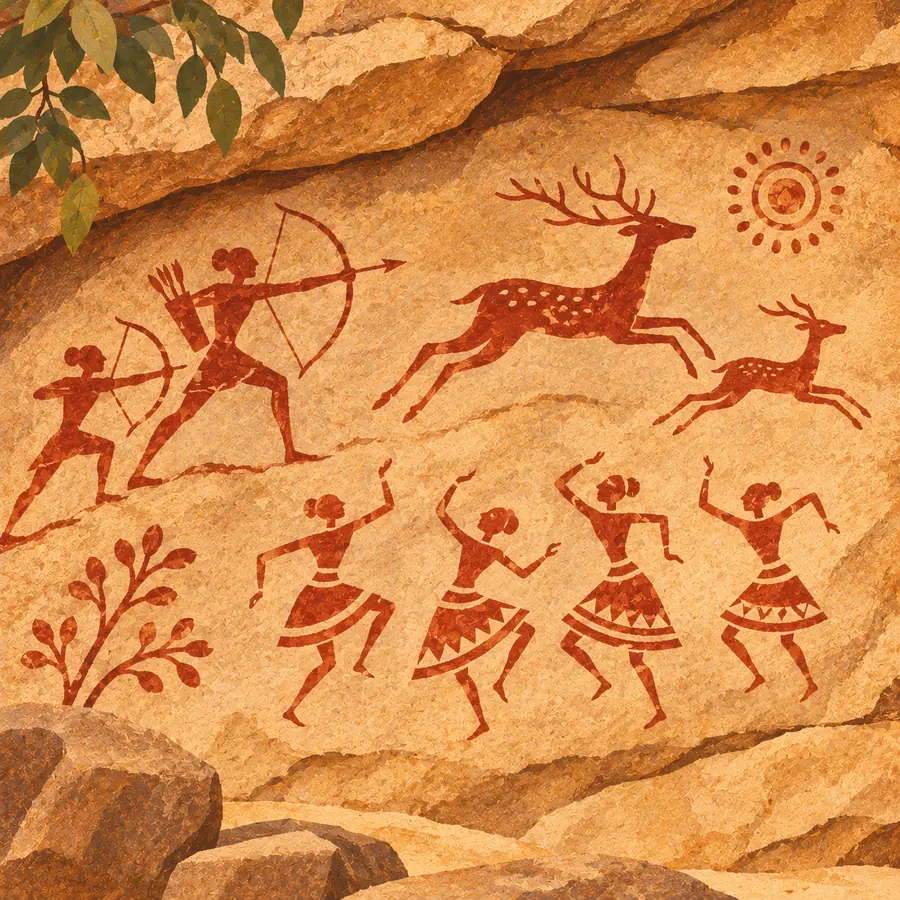
What to look for. India's oldest pictures are on rock. At Bhimbetka, simple figures hunt and dance in red and white. At Ajanta, centuries later, painters filled monastery caves with stories, flowers and ceiling patterns.
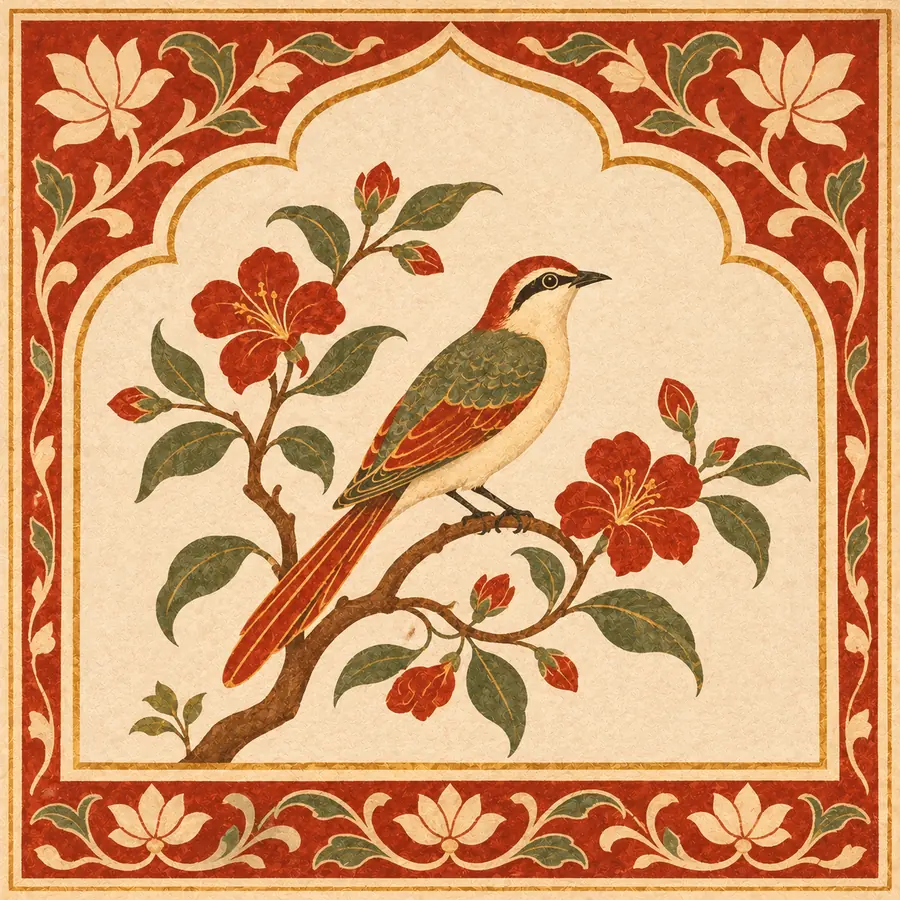
Style of Ustad Mansur, early 17th century · Illustration
Album borderFloral margin from a Mughal album Photo coming soon
Flower studyMughal court, 17th century Photo coming soon
Room 05 · Painting
Mughal miniature
मुग़ल लघुचित्र
Where
Mughal court workshops
When
Late 16th–17th century
Made in
Watercolour and gold on paper
What to look for. Under Emperor Jahangir, court painters such as Ustad Mansur painted birds and flowers so carefully that naturalists still admire them. The pages were framed with borders of flowering plants, which are worth a close look too.
What to look for. Pichwais are large cloth paintings hung behind the image of Shrinathji. They change with the seasons and festivals: cows, lotus ponds, full moons and rows of devotees.
Painted on walls for generations; on paper since the 1960s
Made in
Natural colours, twigs, nib pens
GI
Registered Geographical Indication
What to look for. Mithila painting was made by women on the walls of their homes for weddings and festivals. Every bit of space is filled: fish, peacocks, suns and double outlines with fine hatching.
Tarpa danceWarli spiral of dancers Photo coming soon
Village sceneWarli wall painting Photo coming soon
Warli detailRice paste on mud Photo coming soon
Room 08 · Folk art
Warli
वारली
Where
Thane and Palghar districts, Maharashtra
When
An old wall tradition; widely known from the 1970s
Made in
Rice paste on mud walls
GI
Registered Geographical Indication
What to look for. Warli painting uses circles, triangles and lines to draw whole villages: dancers in a spiral, farmers, trees and animals, in white on a red-brown wall. The artist Jivya Soma Mashe brought it to a wider audience.
Birds and deerGond fill patterns Photo coming soon
Gond detailDots and dashes Photo coming soon
Room 09 · Folk art
Gond
गोंड
Where
Madhya Pradesh
When
Long tradition; on paper and canvas since the 1980s
Made in
Bright colours, fill patterns of dots and dashes
GI
Registered Geographical Indication
What to look for. Gond paintings show trees, birds and animals filled with dots, dashes and fine lines. The artist Jangarh Singh Shyam made the style famous; today many Pardhan Gond artists paint in Bhopal and the villages of Patangarh.
Pattachitra: Odisha. Kalamkari: Srikalahasti and Machilipatnam, Andhra Pradesh
When
Centuries-old temple and cloth traditions
Made in
Pattachitra: painted cloth. Kalamkari: pen-drawn and block-printed cotton
GI
Both registered Geographical Indications
What to look for. Pattachitra artists paint stories of Jagannath and the epics with heavy borders of flowers. Kalamkari ('pen work') uses a bamboo pen and natural dyes to draw flowing plants, peacocks and temple scenes on cotton.
Pulli kolamLines around a dot grid Photo coming soon
Festival rangoliColoured powder Photo coming soon
Room 11 · Floor and wall
Kolam and rangoli
कोलम · रंगोली
Where
Kolam: Tamil Nadu and the south. Rangoli: across India
When
A living, daily practice
Made in
Rice flour and coloured powder
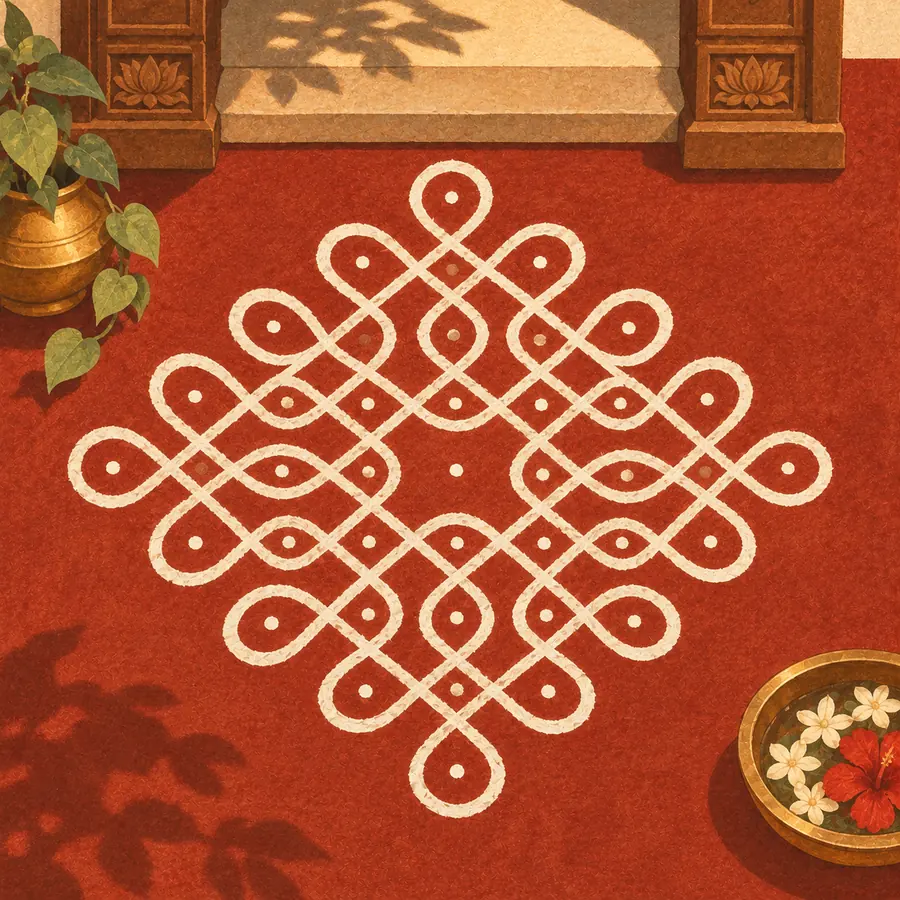
What to look for. Every morning, women across the south draw a kolam at the threshold in rice flour: lines looping around a grid of dots without a break. It welcomes guests and feeds the ants. A doorway pattern, made fresh each day.
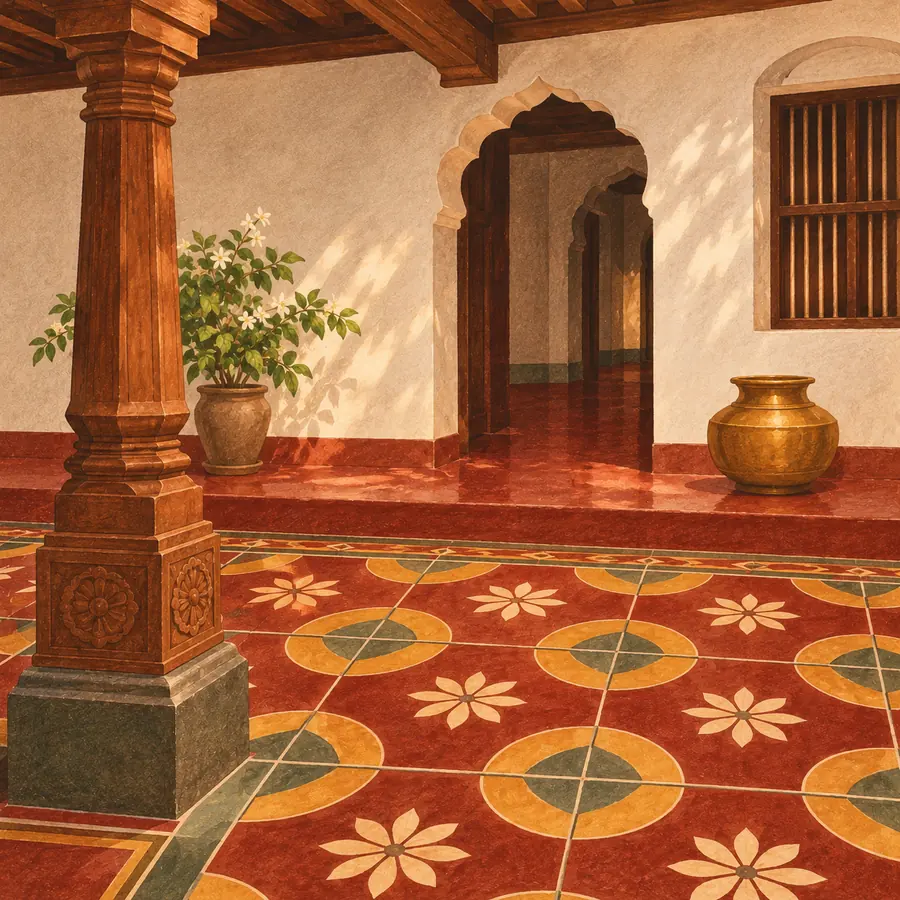
Red oxide floorAn old Indian home Photo coming soon
Tile patternQuarter circles meeting at the corners Photo coming soon
Room 12 · Floor and wall
Athangudi and oxide floors
आथंगुडी टाइल
Where
Athangudi, Chettinad, Tamil Nadu; red oxide floors across India
When
Late 19th–20th century and still made by hand
Made in
Cement and colour poured onto glass, air-dried
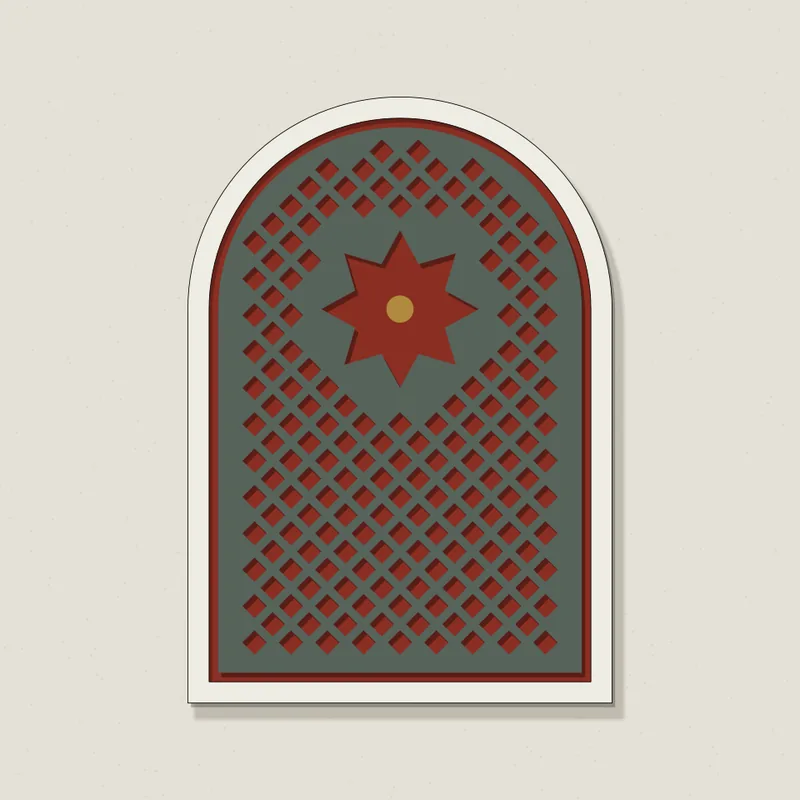
What to look for. Athangudi tiles are made by hand, one at a time, with no kiln. Their repeating circles and flowers, along with the red oxide floors of so many Indian homes, gave Ukera its colours and its tile mark.
This room inspired our own logo: a red oxide tile with उ in the middle.
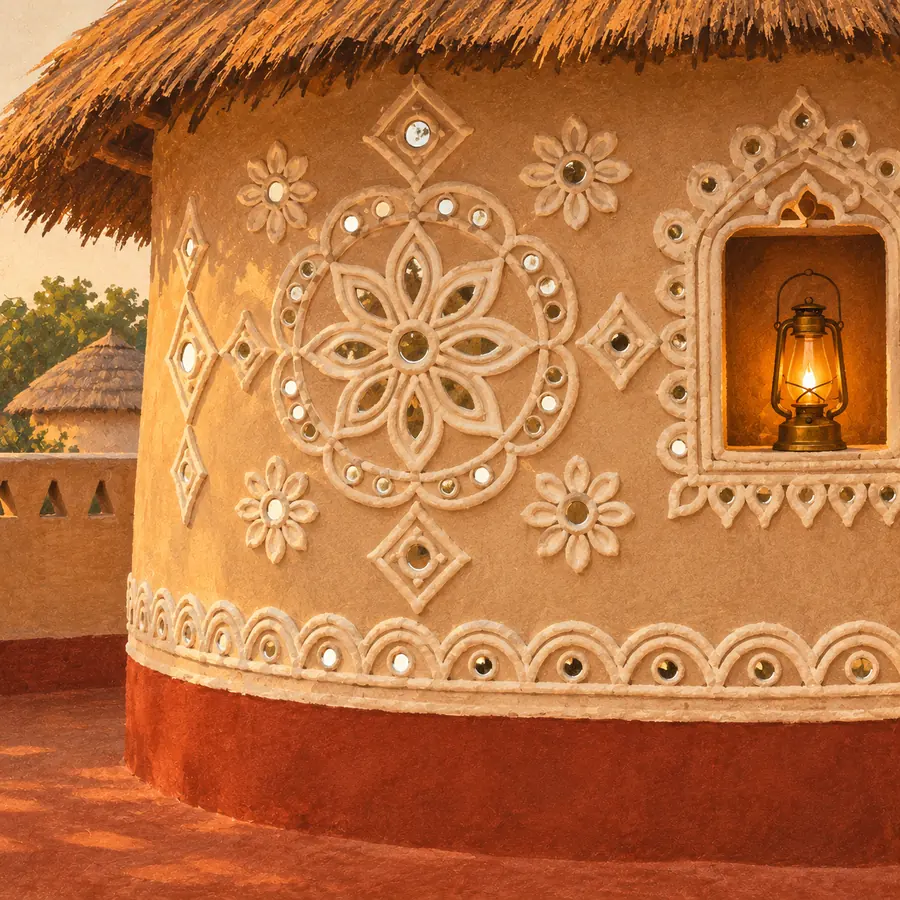
Mirror detailMud relief with mirrors Photo coming soon
Bhunga interiorKutch home Photo coming soon
Room 13 · Floor and wall
Lippan kaam
लिप्पन काम
Where
Kutch, Gujarat
When
A living tradition in Kutch homes
Made in
Mud and camel dung relief with small mirrors
GI
Application filed; not yet registered
What to look for. In Kutch, the walls of round bhunga homes are decorated with raised mud patterns set with small mirrors. In lamplight, the whole wall glitters. Look for the diamonds, peacocks and tree shapes.
Photos in our Museum come from museum open-access collections and public-domain archives, credited under each image. Our own pieces are original designs drawn in our workshop. Many of these traditions are registered Geographical Indications. We use their names here to teach and to credit, not to label our products. If you see something we should correct, write to us.